
Tajikistan visa photos under the Ministry of Foreign Affairs
Tajikistan’s visa photo standard is set by the Ministry of Foreign Affairs of the Republic of Tajikistan, through its Main Consular Department. The same specification governs sticker visas processed via the visa.gov.tj pre-application portal and the in-person packets submitted at Tajik embassies and consulates abroad. A non-compliant photo will be refused at the consular window and the application returned, even when the rest of the file is in order.
Tajikistan runs two parallel channels and does not contract with VFS Global, BLS, TLScontact, or CGI, so the applicant carries the full compliance burden. The evisa.tj portal issues a fully electronic PDF visa and accepts a digital upload, while visa.gov.tj feeds a traditional sticker visa that still requires a printed photograph at the embassy or consulate appointment. Consular officers at Dushanbe Airport apply the same standard to Visa on Arrival packets registered in advance.
Embassy staff capture a biometric image on site at the interview, but this does not replace the self-supplied photograph that must accompany the application. Photos older than six months are rejected, as are prints that show creasing, smudging, or visible retouching of the applicant’s features.
Tajikistan visa photo requirements
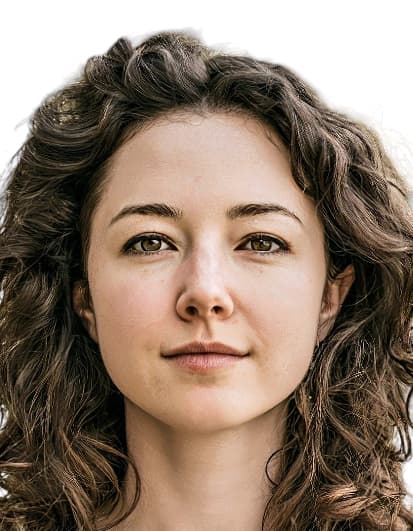
The Tajik Ministry of Foreign Affairs enforces a strict subject-side checklist covering expression, eyewear, hair, headwear, and clothing. Each rule below applies to applicants aged one year and older.
Expression & pose
- Neutral expressionThe applicant must hold a neutral expression with the mouth closed and no visible teeth. Smiling, frowning, and other expressions are rejected.
- Eyes open and forwardBoth eyes must be fully open, unobscured, and looking directly into the lens. Red-eye is not permitted.
- Straight head positionThe head must face the camera squarely with no tilt, turn, or downward angle. Three-quarter and profile poses are rejected.
- Shoulders squaredShoulders should be level and squared to the camera so that the face sits on the vertical midline of the frame.
Eyewear & lenses
- Prescription glassesPrescription glasses are permitted only if the frames are clear and thin, the lenses produce no glare or reflection, and both eyes remain fully visible.
- Sunglasses and tintsSunglasses, tinted lenses, and transition lenses that have darkened are prohibited under MFA guidance.
Hair
- Hair off the faceHair must not fall across the eyes or obscure the outline of the face. Bangs that cover the forehead are not accepted.
Headwear
- Religious and medical onlyHeadwear is prohibited except when worn daily for religious or medical reasons. The full face from the bottom of the chin to the top of the forehead must remain visible.
- No cast shadowsHats, scarves, and head coverings must not cast shadows onto the face. Hat brims and wide head coverings should be avoided.
Jewellery & cosmetics
- Modest jewelleryJewellery may be worn provided it does not obscure facial features or produce glare. Oversized earrings and reflective pieces should be removed.
- Natural cosmeticsCosmetics should be light and natural. Heavy makeup that alters the applicant’s true appearance is not accepted.
Clothing
- Everyday street clothesApplicants must wear ordinary everyday clothing. Uniforms, including military and aviation uniforms, are not permitted.
- Avoid white topsBecause the background is pure white, garments that blend into the backdrop should be avoided so that the shoulder line remains defined.
Photo recency
- Taken within six monthsThe photograph must have been taken within the last six months and must reflect the applicant’s current appearance. A new photo is required after significant changes such as facial trauma, major weight change, or new prominent facial features.
Dimensions, resolution & background.
Head position & camera distance.
- Head height, measured from the bottom of the chin to the top of the head, must be between 32 mm and 35.4 mm (roughly 71–79% of the photo height).
- Eyes must sit between 22 mm and 26.6 mm from the bottom of the photo.
- The head must be centered horizontally in the frame with a small symmetrical margin on each side.
- Both shoulders must be square to the camera and visible. Three-quarter angles or rotated torsos are not accepted.
- The full face from chin to crown must be inside the frame with proper top margin.
Tajikistan accepts more than one size — we generate them all.
Tajikistan publishes more than one acceptable format depending on where you submit your application — domestic passport offices, the official online portal, and regional consulates abroad can each call for a different print or pixel size. We render every variant below from the same source photo, so the head sits at the same physical position across files, and each one arrives in your order email with a clear filename indicating which submission channel it's for.
Tajikistan Visa 35×45 mm
Primary · Print + DigitalTajikistan's official format — the same file works for both printed in-person submissions and the online portal upload.
Tajikistan Visa 50×60 mm — e-Visa
Digital uploadSized for Tajikistan's e-Visa online application.
How recent the photo must be.
Your visa photo must have been taken within the last six months. A new photo is required sooner whenever your appearance has changed in a way that makes the old photo no longer recognizable.
You need a new photo if you’ve had…
- Facial surgery or a major change to facial structure
- A significant gain or loss of weight that visibly changes your face
- Large facial tattoos or piercings added or removed
- A gender transition that has changed your appearance
You do not need a new photo just because of…
- A new hair color
- Growing or removing a beard or moustache
- Ordinary, minor aging
- A new hairstyle that still leaves the face fully visible
Photos for infants and young children.
The Tajik MFA publishes one age-based exception, covering infants under twelve months.
Infants (under 12 months)
Infants under one year are the only documented exception in Tajik MFA guidance. The rules below relax expression and pose, but the child must still appear alone in the frame.
- Eyes may be closedInfants under one year are not required to have their eyes open. This is the only published age exception in Tajik MFA guidance.
- Expression not enforcedA neutral expression is not required for infants. Natural facial expressions are accepted.
- Relaxed head positionMinor head tilt or turn is tolerated for infants who cannot hold a fully frontal pose.
- Child alone in frameThe infant must appear alone in the photo. Toys, pacifiers, supporting adult hands, and chair backs must not be visible.
Other things to know.
A few features of the Tajik visa process catch applicants off guard.
Two separate MFA portals
Tajikistan runs two distinct systems. evisa.tj issues a fully electronic PDF visa and typically requires only a passport bio-page scan, while visa.gov.tj is the pre-application form for a traditional sticker visa and requires this 35x45 mm photo plus a follow-on embassy appointment.
No third-party visa centre
Tajikistan does not contract with VFS Global, BLS, TLScontact, or CGI. All applications go directly to the MFA portals or to a Tajik embassy or consulate, so the applicant carries the full compliance burden.
Bring two physical prints
Consulates differ on the number of prints. Washington and London ask for one, while other missions ask for two. Bringing two prints to the embassy interview or to Dushanbe Airport on arrival covers both cases.
Tehran regional variant
The Tajik consulate in Tehran publishes a 30x40 mm print size rather than the national 35x45 mm standard. Applicants submitting in person through Tehran should confirm the local size before printing.
Take your Tajikistan visa photo at home in three steps.
Plus a human layer. Your files are ready the moment the automatic checks pass — and a real passport-photo specialist also reviews each one, usually within minutes, touching up small issues or flagging anything that needs your attention.
Free to check, and reviewed by a real expert. You only pay when you keep it.
Print-quality requirements for in-person submissions.
When you submit a printed photo at a visa application centre, the paper, finish, and ink all matter. The points below cover the standards most consular missions accept.
- Print on photographic-quality paper at 300 DPI minimum.
- Use a matte or semi-gloss finish; high-gloss can produce reflections that confuse biometric scanners.
- Do not retouch, crop, or alter the photo after printing.
- Bring at least two identical prints when the submission channel calls for paper photos.