

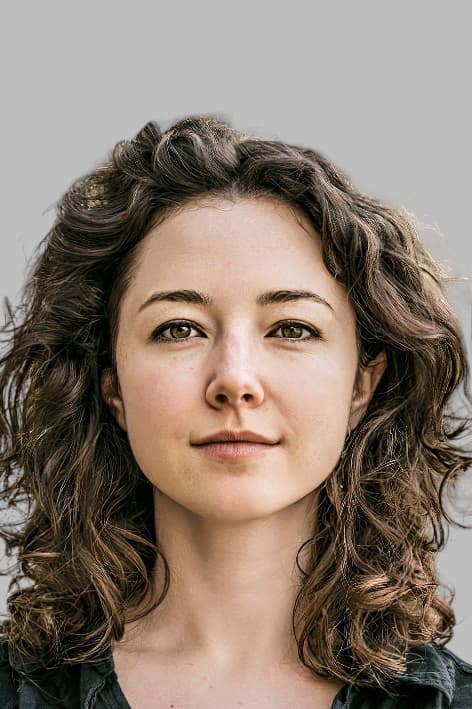
Greek passport photos issued under Hellenic Police specification
The Greek passport photograph is governed by the Hellenic Police (ΕΛ.ΑΣ.) Passport Directorate, operating under the Ministry of Citizen Protection. The technical specification published at passport.gov.gr fixes the print at 40×60 mm on a uniform light grey background of RGB (190, 190, 190) ±10, and requires a strictly neutral expression with the mouth closed. The same biometric standard applies to the Greek national identity card (Ταυτότητα).
Domestic applications are increasingly submitted through the myPhoto service on gov.gr, where a certified photographer transmits the image and the applicant confirms it using a code linked to their Taxisnet credentials and AFM. Consular applications abroad continue to accept physical prints produced on photographic paper, with inkjet and laser output explicitly disallowed by the Hellenic Police.
Compliance is enforced strictly. Photographs that fail the dimensional, background, expression, or facial-clearance rules are rejected by the Passport Directorate, and the applicant must resubmit a new photograph before the file moves forward. Even a closed-mouth smile or a strand of hair crossing the face oval is grounds for rejection under the published Greek specification.
Greek passport photo requirements
The Hellenic Police Passport Directorate enforces these subject-side rules for every Greek passport photo. Get them right and the application moves; get them wrong and it is rejected.
Expression & pose
- Neutral expressionThe applicant must hold a fully neutral expression. Smiling is prohibited, including closed-mouth smiles, which is stricter than the ICAO baseline.
- Mouth closedThe mouth must be closed with no teeth visible. Frowns, pursed lips, and raised eyebrows are all grounds for rejection.
- Eyes open and forwardBoth eyes must be open in a natural resting state, not squinting and not exaggeratedly wide, and must look directly into the lens.
- Frontal head positionThe head must face the camera squarely. Rotation in yaw, pitch, and roll must each stay within five degrees of center.
- Square shouldersShoulders must be level and parallel to the camera. Over-the-shoulder or portrait-style poses are not accepted.
Eyewear & lenses
- Glasses removal recommendedThe Hellenic Police officially recommend removing glasses for the photo. The zero-glare requirement is difficult to satisfy in practice, so glasses-free photos are the safer route.
- Sunglasses and tinted lensesSunglasses, tinted lenses, and photochromic or transition lenses such as Photo Gray and Photo Brown are prohibited.
- Clear prescription glassesClear prescription glasses are permitted only if there is no reflection on the lenses, the frames are thin, and the frames do not cover the eyes or any other facial feature.
- Contact lensesClear prescription contact lenses are permitted. Colored or cosmetic contact lenses that alter natural eye color are prohibited.
Hair
- Face must stay clearHair must not cover the eyes, eyebrows, or any part of the face. Full eyebrow visibility is required.
- Ear-to-ear face ovalThe face oval from one ear to the other must be unobstructed. A single strand crossing the cheekbone or falling in front of the ear is grounds for rejection.
- Bangs and fringesBangs and fringes must be swept aside or pinned back so the forehead and eyebrows are fully visible.
- Volume and wigsVoluminous or bushy hair is acceptable provided the face oval stays clear. Wigs worn daily for medical or personal reasons are permitted under the same facial-clearance rules.
Headwear
- Default prohibitionHats, caps, scarves, and other non-religious head coverings are prohibited.
- Religious exceptionReligious head coverings are permitted if the face is fully visible from jaw to forehead and from ear to ear.
- Medical exceptionMedical head coverings are permitted only when accompanied by a documented medical certificate submitted with the application.
- Headwear must not cast shadowAny permitted covering must not cast shadows on the face and must not match the grey background tone.
Jewelry & accessories
- Subtle jewelry onlySmall, non-reflective earrings and necklaces are acceptable. Large or highly reflective pieces that cause glare or cast shadows on the face must be removed.
- Facial piercingsFacial piercings are permitted provided they do not obscure facial features or create reflections.
- Hair accessories and headphonesHair accessories, headbands, clips visible in frame, and headphones are prohibited.
Cosmetics
- Natural appearanceMakeup must look natural and must not alter natural skin color or facial structure. Heavy contouring and dramatic eyeshadow are rejection risks.
- False eyelashesFalse eyelashes that alter the natural shape of the eye are not permitted.
- Permanent facial tattoosPermanent facial tattoos are part of the applicant’s appearance and do not need to be covered.
Clothing
- Civilian clothing requiredEveryday civilian clothing is required. Military, police, and other occupational uniforms are prohibited.
- Religious dressReligious or clerical attire is permitted.
- Avoid background-matching tonesClothing should contrast with the light grey background. Plain grey garments that blend into the backdrop should be avoided.
- No costumesCostumes and stylized attire are not accepted.
Photo quality
- No shadows on the faceShadows under the nose, chin, or eye sockets are grounds for rejection. Headwear and accessories must not cast shadows across facial features.
- No red-eyeRed-eye is an automatic rejection. The Hellenic Police require the photo to be retaken rather than digitally corrected.
- Sharp subjectThe subject must be sharp and free of motion blur. Eyes, eyebrows, and mouth edges must be clearly resolved.
Dimensions, resolution & background.
Head position & camera distance.
- Head height, measured from the bottom of the chin to the top of the head, must be between 32 mm and 36 mm (roughly 51.6–58.3% of the photo height).
- Eyes must sit between 29 mm and 35 mm from the bottom of the photo.
- Top margin (from the top of the head to the top edge): 2–5 mm.
- The head must be centered horizontally in the frame, with a small symmetrical margin on each side.
- Shoulders must be square to the camera and both visible. No three-quarter angles or rotated torso.
- The full face, from chin to crown, must be inside the frame with proper top margin.
How recent the photo must be.
Your passport photo must have been taken within the last six months. A new photo is required sooner whenever your appearance has changed in a way that makes the old photo no longer recognizable.
You need a new photo if you’ve had…
- Facial surgery or a major change to facial structure
- A significant gain or loss of weight that visibly changes your face
- Large facial tattoos or piercings added or removed
- A gender transition that has changed your appearance
You do not need a new photo just because of…
- A new hair color
- Growing or removing a beard or moustache
- Ordinary, minor aging
- A new hairstyle that still leaves the face fully visible
Photos for infants and young children.
Greece keeps composition and pose rules tight for every applicant. The narrow accommodation below applies to infants under 1.
All ages, including infants
The Hellenic Police hold babies and children to the same compositional standard as adults, with one practical concession for the youngest applicants.
- Subject alone in frameNo hands, pacifiers, toys, car seats, or supporting adults may appear anywhere in the photo.
- Infant positioningInfants may be laid on a plain background sheet to achieve isolation while keeping the head straight and the face fully visible.
- EyesEyes must be open and the expression neutral. Infants under 1 year may be accepted with closed eyes when an awake shot is not realistic.
Country-specific details to know.
A few Greek rules trip up applicants who assume the spec matches the rest of the EU.
Smile ban
Even a faint closed-mouth smile is rejected. Greece is stricter on expression than the ICAO baseline and stricter than most other EU passport authorities, so hold a fully neutral face.
Ear-to-ear face oval
The entire face oval from one ear to the other must be clear of hair. A single strand falling across the cheekbone or in front of the ear is enough to fail the photo, which is tighter than the typical EU ’eyes and eyebrows visible’ rule.
Consular recency window
The central rule allows photos up to six months old, but some Greek consulates, including London and Washington D.C., require the photo to be no more than one month old. Confirm the window with the specific consulate before submitting abroad.
myPhoto digital chain
Domestic applications increasingly run through myPhoto, where a certified photographer transmits the image and the applicant links it to their record using Taxisnet or AFM with an SMS or email code. Printed-photo acceptance inside Greece is being phased out in favor of this digital workflow.
As easy as snap, upload, done.
You take a quick picture. We do the spec work and tell you immediately if anything needs a retake.
Plus a human layer. Your files are ready the moment the automatic checks pass — and a real passport-photo specialist also reviews each one, usually within minutes, touching up small issues or flagging anything that needs your attention.
Free to check, and reviewed by a real expert. You only pay when you keep it.
Print & paper standards.
If you submit a printed photo with a paper application, the print itself has to meet acceptance-facility standards in addition to the rules above.
- High-quality white photographic paper (not watercolored, textured, or embossed) with a glossy finish.
- Inkjet printing is not accepted. Use a professional photo lab.
- No visible pixels, banding, dithering, or printer artifacts.
- The print must be undamaged: no creases, holes, smudges, staples, or pinholes.
- Do not write on the back of the photo.
- 2 identical prints are required.